
January 20, 2017
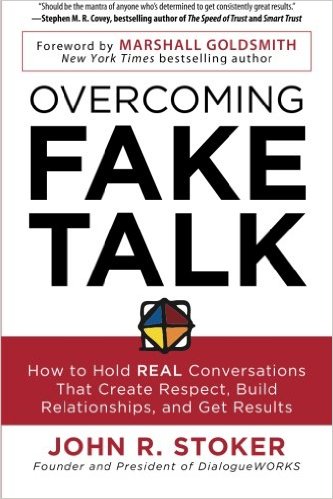
Interview with John Stoker, author of the book Overcoming Fake Talk
Mike Carruthers: You know those really difficult conversations you have to have with your spouse, your child or your boss? What makes them so difficult is the potential for conflict.
John Stoker: My research has indicated that most people avoid conflict like the plague. So if they think there will be a conflict they won’t’ talk about what the issue is – so it’s just easier to just kind of withdraw altogether.
John Stoker, author of the book Overcoming Fake Talk, says there is a way to keep a difficult conversation what he calls above the line – meaning focused on the issue at hand.
The easiest way to lift a conversation above the line is to ask questions. For 2 reasons, 1; it forces people out of the unconscious and subconscious part of their brain, they have to go to their conscious part of their brain to answer the questions. And the more questions you ask the more it communicates to them that you care about the answer which changes the whole dynamic of the conversation.
When conversations do get emotional and below the line, as John says, it’s often a good idea to stop.
Because what happens to people when they’re deep below the line and they’re highly emotional those parts of their brain give them an adrenaline dump and they’re more into self-preservation or fight or flight than they are into thinking. Sometimes when my spouse becomes angry with me she’ll go, “I want to talk about this now”. Right and obviously we’re not going to have a rational conversation in that particular emotional state.

Podcast: Play in new window | Download
Subscribe: RSS